Contractor Selection · October 27, 2026 · 7 min read
Do You Need a Local Contractor for a Palos Verdes Remodel
Discover why hiring a local contractor for your Palos Verdes remodel helps navigate hillside ordinances and architectural juries to prevent costly delays.
Living on the Palos Verdes Peninsula offers a distinct coastal lifestyle, but updating a home here comes with an equally distinct set of rules. When you decide to remodel a kitchen, add a suite, or overhaul your exterior, the initial major choice is who will run the project. Many homeowners wonder if they should bring in a builder from the broader regional market or stick to someone based locally.
The difference often comes down to how well the builder understands the specific municipal codes, hillside ordinances, and architectural juries that govern our local cities. A contractor accustomed to flat, inland neighborhoods might assume a permit takes a short time and requires standard soil reports. On the Peninsula, that same assumption can stall a project before a single wall is opened.
At PV Premier Builders, we operate as an independent matching service to help you compare and choose the right professional for your home. We match homeowners with contractors, with no pressure. Understanding the value of local knowledge is a practical step in evaluating who is equipped to handle your specific property.
Navigating City Plan Review Timelines
Every city has a process for reviewing construction plans, but the timelines on the Peninsula require careful scheduling and realistic expectations. The review phase is where your architectural drawings are checked against local zoning laws, structural requirements, and safety codes. A builder who knows the local building departments understands that this phase cannot be rushed or treated as an afterthought. They know exactly what the city planners look for on the initial submission.
When a builder submits incomplete plans or fails to account for specific local codes, the city will return the application with a list of corrections. Each round of corrections adds a significant delay to your waiting period. A local professional minimizes these cycles by anticipating the requirements for grading, drainage, and structural engineering specific to our coastal terrain. They speak the same language as the city reviewers.
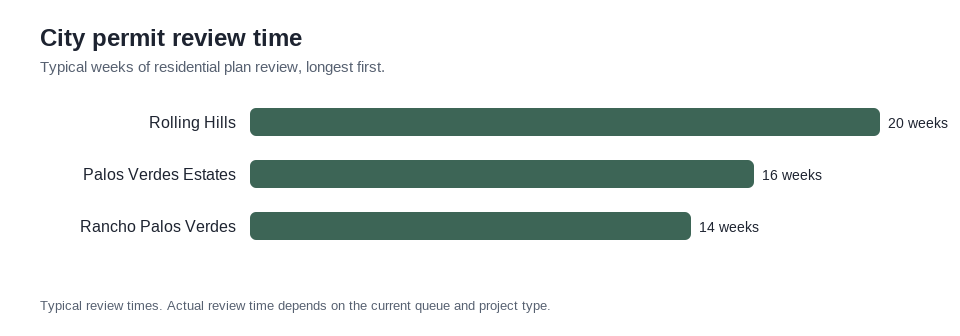
Setting a realistic schedule from the beginning reduces frustration. Looking at typical timelines, you might plan for 20 weeks of city plan review in Rolling Hills or 14 weeks of city plan review in Rancho Palos Verdes. A contractor who operates primarily outside the area might promise a much faster turnaround, not realizing the depth of review required here. Knowing the actual timelines helps you plan your life around the remodel.
Typical weeks of city plan review used in the timeline ranges.
Building on Slopes and Coastal Bluffs
The geography that gives the Peninsula its character also creates significant construction challenges. Hillside ordinances dictate how you can build on slopes, manage water runoff, and stabilize the soil. These rules protect properties from landslides and erosion, but they also require specialized engineering and construction techniques. A contractor familiar with flat terrain might underestimate the scope of foundation work needed for a hillside addition.
Local builders already know which geological surveys and soil reports the city will demand before approving a foundation plan. They have established relationships with the geotechnical engineers who specialize in Peninsula soil conditions. This network is vital because the city relies on these experts to confirm that your project will not negatively impact the stability of your lot or your neighbors down the hill.
Drainage is another major factor in hillside construction. The way water moves across your property must be carefully managed to comply with local environmental regulations. A contractor who regularly works here will automatically factor retaining walls, specialized drainage systems, and grading plans into their initial timeline and budget. This prevents surprise expenses and sudden work stoppages when an inspector visits the site.
Passing the Art Jury and Homes Association
In several Peninsula communities, getting a city permit is only part of the approval process. You must also present your plans to an architectural jury or a homes association. These boards exist to maintain the visual harmony and historical character of the neighborhoods. They review everything from the pitch of your roof and the style of your windows to the color of your exterior stucco and the placement of your trees.
Presenting to an architectural jury requires a specific approach. The board wants to see that your design respects the established neighborhood aesthetic. A local contractor has been through this process many times. They know what types of materials are generally approved and which design choices are likely to face rejection. This insight is incredibly valuable during the early design phase, as it keeps you from falling in love with a concept that will never be allowed to be built.
When a builder from outside the area submits plans that ignore these aesthetic guidelines, the jury will send them back for revisions. This not only costs money in redesign fees but also pushes your start date further into the future. A professional who understands the local boards will guide your design choices to align with community standards from the very first sketch, smoothing the path to final approval.
Understanding the Full Schedule from Design to Move-In
When evaluating a contractor, you need to look at the entire timeline, not just the active construction phase. The total duration includes design, permit review, the actual building process, and final inspections. A common mistake is focusing only on how long the framing and finishing will take, while ignoring the time required to get the paperwork approved. Local professionals provide realistic schedules that account for every single phase.
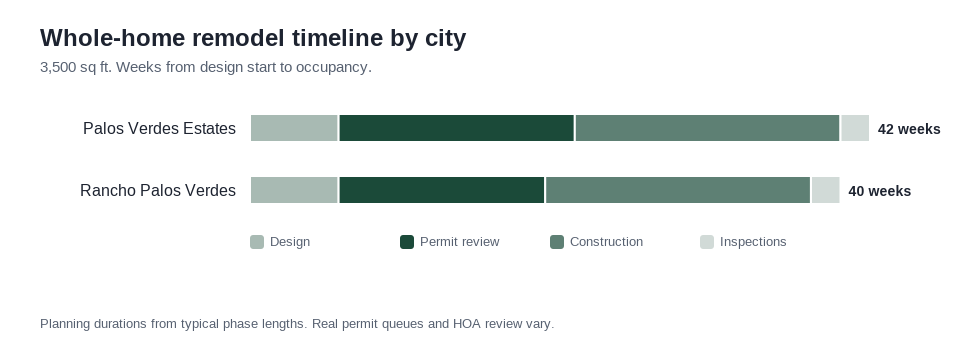
Consider a 3,500 sq ft whole-home remodel. In Palos Verdes Estates, the timeline might include design 6 weeks, permit review 16 weeks, construction 18 weeks, and final inspections 2 weeks; the TOTAL from design start to occupancy is 42 weeks. A builder who understands this rhythm will not make empty promises about finishing in a fraction of the time. They will structure their crew schedules and material orders around these known municipal milestones.
Similarly, in Rancho Palos Verdes, the breakdown might be design 6 weeks, permit review 14 weeks, construction 18 weeks, and final inspections 2 weeks; the TOTAL from design start to occupancy is 40 weeks. The construction phase itself is identical, but the administrative phases shift the final completion date. Partnering with someone who tracks these local nuances means you can confidently plan your temporary housing, furniture deliveries, and moving dates.
Estimated weeks from design start to occupancy for a 3,500 sq ft whole-home remodel. Planning ranges.
Managing Deliveries on Winding Peninsula Roads
The physical logistics of remodeling on the Peninsula are vastly different from working in a typical suburban grid. Our winding, narrow roads and steep driveways make material delivery a complex puzzle. Large delivery trucks cannot easily navigate tight switchbacks, and many neighborhoods have strict rules regarding street parking, dumpster placement, and heavy equipment access. A contractor must plan exactly how lumber, concrete, and appliances will physically reach your property.
Local contractors have established systems for managing these logistical hurdles. They know which suppliers have the right-sized trucks for hillside deliveries and how to stage materials on a sloping lot without blocking the street or violating neighborhood rules. They also understand the local restrictions on construction hours and noise, ensuring that your project does not become a nuisance to your neighbors.
Site management also involves handling the debris generated during demolition and construction. Placing a dumpster on a steep incline requires specific permits and safety measures. A builder who works here daily handles these details automatically. When a contractor is unfamiliar with the area, logistical failures often lead to delayed material arrivals, frustrated crews waiting for supplies, and angry phone calls from the local homes association.
The Value of Established Subcontractor Relationships
A general contractor rarely performs every task on a remodel themselves. They rely on a network of subcontractors, including electricians, plumbers, roofers, and tile setters. When you hire a locally based professional, you are also gaining access to their established network of local tradespeople. These subcontractors are familiar with the specific building methods and quality standards expected in Peninsula homes.
Subcontractors prefer to work with general contractors who run organized, predictable job sites. Because local builders understand the municipal inspection schedules, they can coordinate their tradespeople efficiently. An electrician knows that when a local builder calls them to the site, the framing will actually be ready for wiring. This mutual respect keeps the project moving forward without long gaps of inactivity.
Furthermore, local tradespeople are invested in their community reputation. They know that their work will be seen by other residents and evaluated by strict local inspectors. A contractor from far away might bring in crews who are unwilling to make the long drive down the Peninsula every day, leading to inconsistent attendance and delayed progress. A local team is already here, ready to focus on your home.
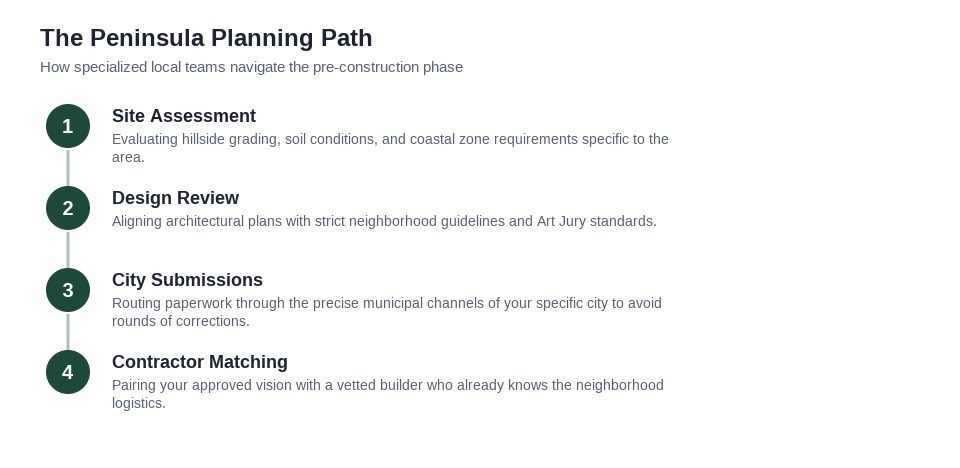
How specialized local teams navigate the pre-construction phase
How to Evaluate Your Contractor Options
Choosing the right professional requires asking specific questions about their local background. During your initial interviews, ask potential builders to describe their recent projects on the Peninsula. Listen carefully to how they talk about the city planners, the architectural boards, and the hillside building codes. Their answers will quickly reveal whether they view local regulations as a normal part of the job or as an unexpected burden.
Request references from homeowners in your specific city or neighborhood. Speaking with past clients gives you a clear picture of how the contractor handles the inevitable challenges of a major remodel. Ask the references if the project stayed reasonably close to the initial timeline and if the builder successfully managed the permit and inspection process without excessive delays or rounds of corrections.
Remember that PV Premier Builders is here to help you navigate this selection process. We match homeowners with contractors, with no pressure, allowing you to compare qualified professionals who understand the realities of building on the Peninsula. Taking the time to evaluate local expertise upfront protects your investment and sets the stage for a calm, organized remodeling experience.
Key takeaways
Local contractors understand the specific hillside ordinances and soil requirements needed to build safely on the Peninsula.
Familiarity with architectural juries helps streamline the design approval process and prevents costly revisions.
Accurate timelines depend on knowing the exact duration of city plan reviews for your specific municipality.
Established relationships with local subcontractors and suppliers solve the logistical challenges of narrow, winding roads.
Questions
Frequently asked questions
Q1Why do Peninsula cities have different building rules than other areas?
The Peninsula features unique coastal geography, steep hillsides, and active geological zones. Local building rules are designed to manage water runoff, prevent soil erosion, and ensure that structures remain safe during seismic activity or heavy rains.
Q2How does an architectural jury impact my remodeling plans?
Architectural juries review your exterior design choices to ensure they align with the historical and aesthetic standards of the neighborhood. They can approve, reject, or request modifications to your rooflines, materials, and paint colors before you can obtain a building permit.
Q3Can a contractor from outside the area handle a hillside foundation?
While any licensed professional can technically bid on the work, a contractor unfamiliar with local hillside ordinances may underestimate the required soil reports, retaining walls, and specialized engineering, leading to budget surprises and permit delays.
Q4What happens if my plans are rejected by the city building department?
If plans are rejected, the city returns them with a list of required corrections. Your architect or builder must revise the drawings and resubmit them. This cycle can add a significant delay to your timeline, which is why local knowledge is crucial for getting it right early.
Q5How do I verify that a contractor actually knows the local codes?
Ask them to walk you through the permit and approval steps for your specific city. A knowledgeable professional will easily explain the local requirements for soil reports, drainage plans, and architectural board reviews based on their recent projects in the area.
Compare whole-home remodel timelines and permit wait times in Palos Verdes Estates versus Rancho Palos Verdes to help plan your upcoming Peninsula project.
Next step
Take the next step
Answer a few questions and see local matches, with no pressure.