Cost to Build a Custom Home on the Palos Verdes Peninsula
Learn the costs, timelines, and local requirements for building a custom home on the Palos Verdes Peninsula, from planning to final inspections.
Building a custom home from the ground up on the Palos Verdes Peninsula is a highly specific process. You are not just putting up framing and drywall on a flat piece of land. You are working with strict coastal commission guidelines, complex steep hillside grading, and distinct neighborhood requirements that change dramatically from one zip code to the next. The soil, the slopes, and the local regulations all demand specialized attention.
A custom build requires clear, realistic expectations around both budget and time. Many homeowners start with a grand vision but quickly hit practical questions about how much the dirt work will actually cost or how long the city will take to review the architectural plans. Knowing exactly what to expect early in the planning phase prevents expensive surprises later.
At PV Premier Builders, we match homeowners with contractors. We do not build homes, employ construction crews, or hold a contractor license ourselves. Instead, we help you compare your options with absolutely no pressure. Here is a detailed look at what drives the cost, the schedule, and the regional nuances for a new custom home on the Peninsula.
Regional Cost Differences Across the Peninsula
The specific city you choose to build in shapes your budget long before the first shovel hits the dirt. Each municipality on the Peninsula enforces different rules for lot coverage, view preservation, and acceptable architectural styles. These local rules directly influence the design complexity and the types of materials required. A home in Palos Verdes Estates faces different design review standards and neighborhood committee approvals than a similar home in Rancho Palos Verdes.
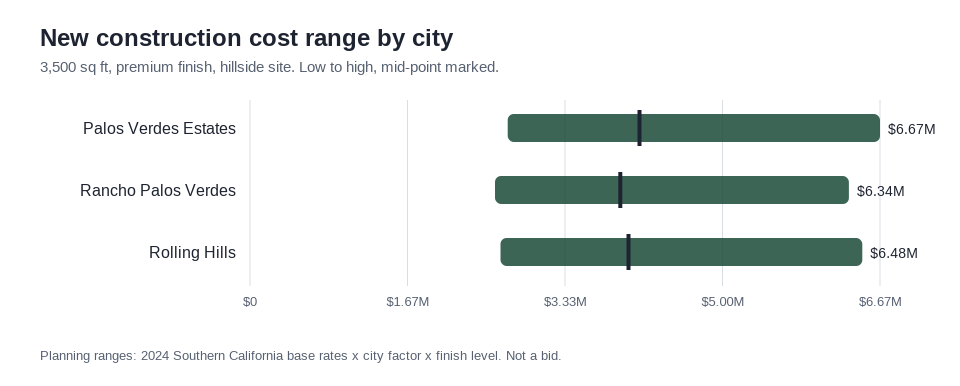
The data shows planning ranges for a 3,500 sq ft home with premium finishes. In Palos Verdes Estates, the mid-point lands at $4.12M. Move over to Rancho Palos Verdes, and that same mid-point is slightly lower at $3.92M. These variations come from local permitting fees, restricted hauling routes for heavy trucks, and the specific structural engineering required to satisfy each city planning department.
Rolling Hills presents its own unique scenario, with a mid-point of $4.01M for the exact same size and finish level. The large lots and equestrian trail requirements often mean more extensive site preparation and longer utility runs. When you evaluate a contractor, ask how much work they have completed in your specific city. Local familiarity helps them anticipate the exact fees, neighborhood rules, and site constraints that drive these baseline costs.
Planning cost ranges for a 3,500 sq ft new construction (premium finish). Planning ranges, not a bid.
How Material Choices Move the Budget
After the location is settled, your choice of interior and exterior finishes has the largest impact on the final number. A custom home is essentially a massive collection of individual decisions. The flooring, the windows, the roof tiles, and the kitchen appliances all stack up to create the final price tag. Contractors generally group these choices into standard, premium, and luxury tiers to help you set a realistic target early in the process.
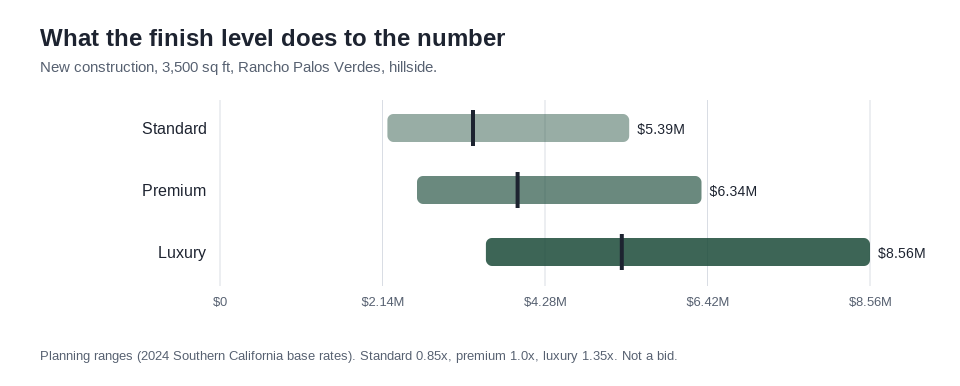
Looking at a 3,500 sq ft home in Rancho Palos Verdes, the financial gap between these tiers is clear. A standard finish sits at a mid-point of $3.33M. Upgrading to a luxury finish pushes that mid-point to $5.29M. That significant difference covers custom cabinetry, imported stone countertops, high-end appliance packages, and specialized architectural details like disappearing glass walls that open the living room to panoramic ocean views.
It is incredibly easy to drift between categories during the design and shopping phase. You might plan for a premium build but fall in love with luxury kitchen finishes or imported bathroom tiles. A good contractor will track these choices and show you exactly how they affect the total. When comparing bids, make sure every contractor is quoting the exact same finish level so you are looking at an accurate comparison.
How finish level moves a 3,500 sq ft new construction in Rancho Palos Verdes. Planning ranges, not a bid.
The Timeline from Design to Move-In
Patience is a strict requirement for building on the Peninsula. The timeline is rarely dictated by how fast a crew can pour concrete or swing hammers. Instead, the schedule is heavily influenced by the design review boards, extensive soil testing, and city permitting processes. You have to account for these administrative phases long before the physical work begins on your lot.
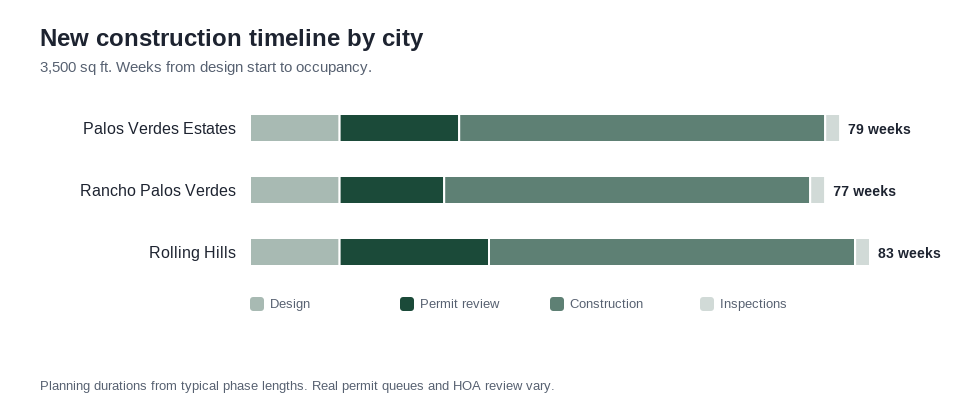
For a 3,500 sq ft home, the total time from design start to occupancy varies by city. In Rancho Palos Verdes, expect about 77 weeks. The same project in Rolling Hills takes roughly 83 weeks. The actual construction phase is often identical across the hill, taking about 49 weeks. The variation in the total timeline comes entirely from the paperwork, neighborhood reviews, and city approval stages.
Permit review is the biggest variable in the schedule. Palos Verdes Estates averages 16 weeks for this phase, while Rolling Hills can take 20 weeks. Neighborhood art juries and view preservation committees often request revisions to rooflines, exterior colors, or landscaping plans. When interviewing contractors, ask about their specific strategy for managing the local permit process to keep the project moving forward without unnecessary delays.
Estimated weeks from design start to occupancy for a 3,500 sq ft new construction. Planning ranges.
Navigating Hillside Site Preparation
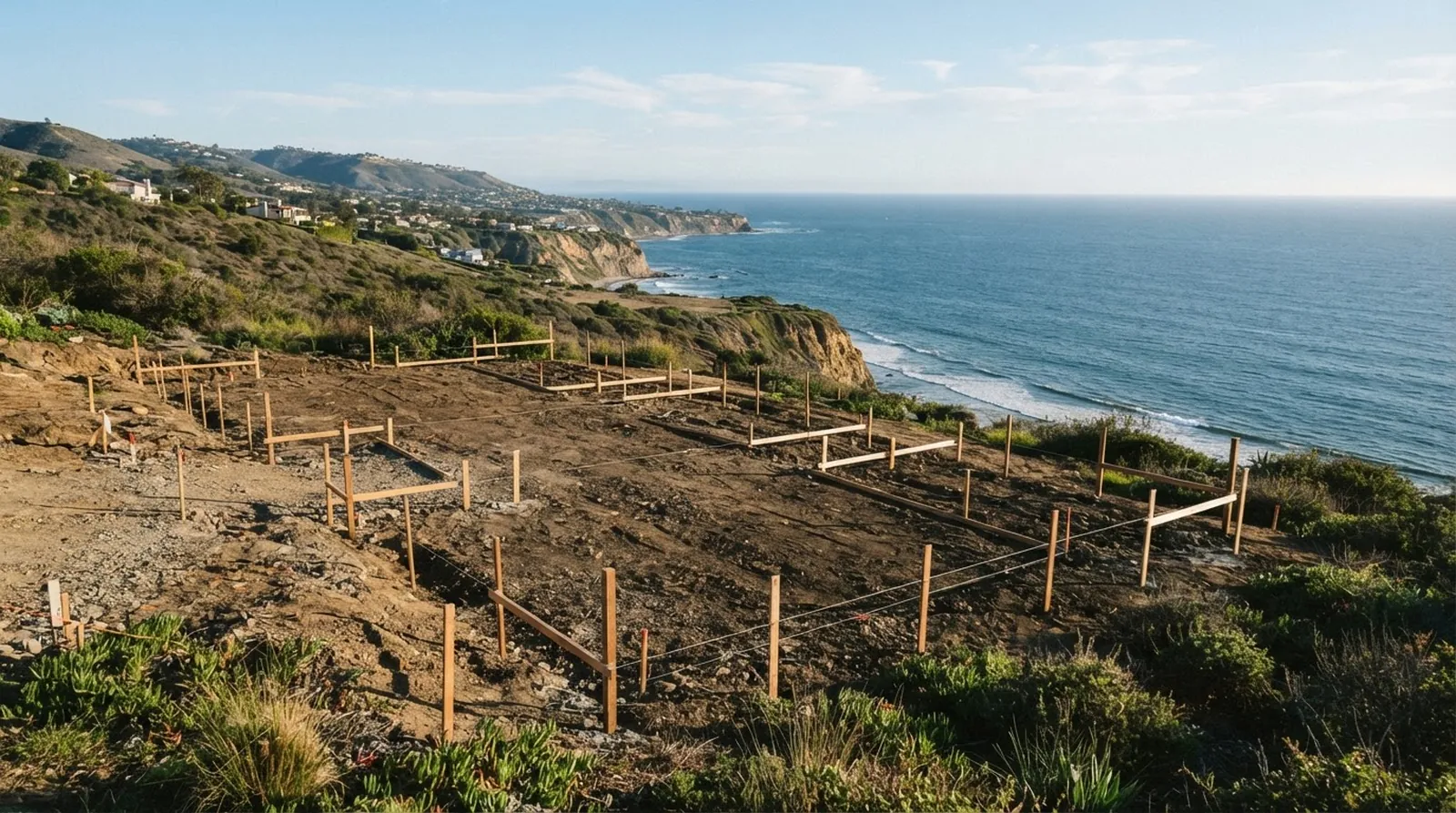
The Peninsula is famous for its rolling topography and sweeping ocean views. However, those views come with complex soil conditions. Before any foundation work starts, your site needs a thorough geological evaluation. The soil here often contains expansive clay that swells when wet and shrinks when dry, requiring specialized engineering to keep the house stable over the decades.
Site preparation is rarely a simple task on the hill. Grading a steep lot means moving tons of dirt. If the dirt cannot be spread on site, it has to be hauled down the hill, which adds trucking costs and triggers specific city hauling permits. Retaining walls are almost always required to manage water runoff, hold back the slope, and create flat usable spaces for patios or driveways.
This phase is where budgets often face the most pressure. The earth holds surprises that even the best soil reports might miss, such as hidden bedrock or old debris. A contractor who knows the local geology will build a realistic contingency into the site prep budget. They will also coordinate closely with structural engineers to design caissons or specialized footings that anchor the home deep into the stable bedrock.
Evaluating and Choosing a Contractor
Finding the right person to run your project is the most critical decision you will make. You are entering a working relationship that will last a long time. You need someone who communicates clearly, runs a clean and safe job site, and has a proven history of finishing custom homes specifically on the Peninsula.
Start by looking closely at their past projects locally. A contractor who usually builds flat-lot tract homes in another county might struggle with the logistical hurdles of a steep Palos Verdes site. Ask to see a home they recently finished and, if possible, speak to the homeowners about how the contractor handled delays, unexpected costs, and neighborhood complaints.
Review their bidding process carefully. A trustworthy contractor will not give you a single lump sum on a napkin. They should provide a detailed breakdown of costs, separating site prep, framing, plumbing, electrical, and finishes. This transparency shows they have actually thought through the project. PV Premier Builders can help you gather these detailed proposals. We match homeowners with contractors, giving you the tools to compare options side by side.
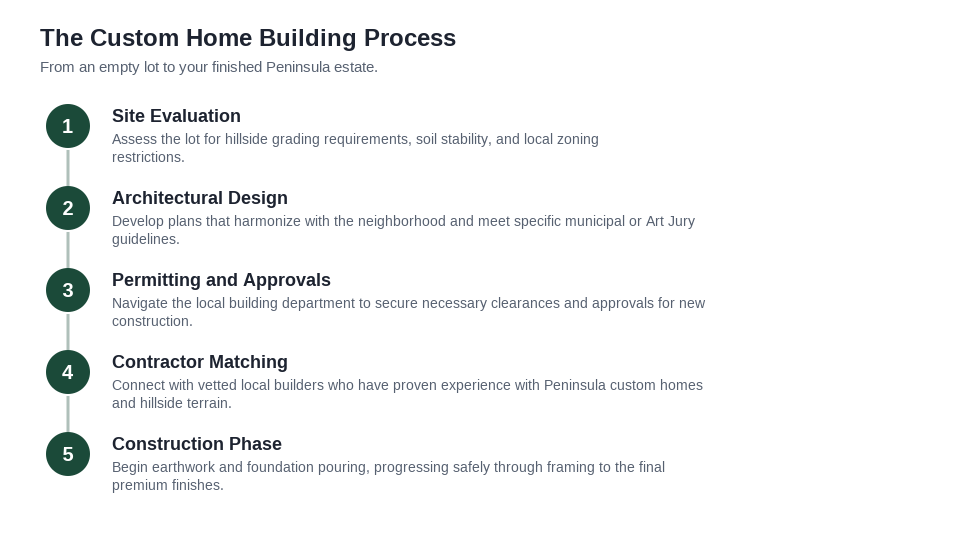
From an empty lot to your finished Peninsula estate.
Managing Contingencies and Unknowns
No custom home is built exactly to the initial budget penny. Weather delays, material shortages, and hidden site conditions will test the plan. Setting aside a contingency fund is not just a good idea; it is an absolute necessity. Most professionals recommend holding back a reserve of the total budget specifically for the unexpected issues that arise once the walls are opened or the dirt is moved.
Changes during construction are the other major budget variable. Walking through the framed house, you might decide to move a wall, add a window to capture a better view, or upgrade the bathroom tile. These change orders require new materials, extra labor, and sometimes revised permits from the city. The costs for these mid-project changes add up very quickly.
Talk to potential contractors about how they handle change orders. The process should be documented and approved in writing before the extra work happens. A clear system prevents billing surprises at the end of the project. Your goal is to keep the project moving forward while maintaining total visibility over where your money is going at every stage of the build.
The Role of Architects and Designers
Before a contractor can give you an accurate price, you need a complete set of plans. The architect and interior designer are the first professionals you will hire. They translate your ideas into the blueprints that the city will review and the builders will follow. On the Peninsula, architects also play a crucial role in navigating the local design guidelines and view preservation rules.
A good architect designs with your budget in mind, but they are not the ones buying the lumber or paying the plumbers. This is why it is helpful to bring a contractor into the conversation early. When the builder and the architect collaborate during the design phase, they can identify expensive structural elements and suggest more cost-effective alternatives before the plans are finalized and submitted to the city.
Your interior designer will help you select the finishes that dictate whether your home falls into the standard, premium, or luxury category. They track the tile, the fixtures, and the lighting. Having these selections made early prevents delays during construction. If the builder knows exactly what materials are needed, they can order them in advance, keeping the project on schedule and avoiding last-minute compromises.
Key takeaways
Regional rules matter: Building costs and timelines vary significantly between Palos Verdes Estates, Rancho Palos Verdes, and Rolling Hills due to local permitting and site requirements.
Finishes drive the budget: The gap between standard and luxury finishes can swing the total cost significantly, making early material selection critical.
Patience is required: The administrative phases, including design and permit review, take extra time before any physical construction begins.
Site prep is complex: Hillside grading, soil engineering, and retaining walls require specialized local knowledge and a healthy contingency fund.
Compare detailed bids: Always evaluate contractors based on transparent, itemized proposals rather than a single lump-sum estimate.
Questions
Frequently asked questions
Q1Why does permit review take so long on the Peninsula?
Cities on the Peninsula have strict guidelines regarding view preservation, lot coverage, and architectural styles. Plans often have to pass through neighborhood art juries and planning commissions, which adds extra time to the review process.
Q2Do I need a soil report before getting a construction bid?
Yes. The Peninsula is known for expansive clay soils and steep slopes. A geological report tells the structural engineer how to design the foundation, which the contractor needs to provide an accurate cost for site preparation.
Q3How much should I set aside for a contingency fund?
Most professionals recommend setting aside a reserve of your total budget. This covers unexpected soil conditions, weather delays, and any changes you decide to make after construction begins.
Q4Can I live on the property while building a new custom home?
Generally, no. Building from the ground up requires heavy machinery, utility shutoffs, and extensive grading. The site is an active construction zone and is not safe or practical for habitation until the final inspections are complete.
Q5How does PV Premier Builders help with the process?
We match homeowners with contractors. We do not build the homes or hold a contractor license. Our service helps you gather detailed proposals and compare local professionals so you can make an informed decision with no pressure.
Compare whole-home remodel timelines and permit wait times in Palos Verdes Estates versus Rancho Palos Verdes to help plan your upcoming Peninsula project.
Learn the costs, timelines, and efficiencies of bundling a kitchen and bathroom remodel in Rancho Palos Verdes to help you plan your next home project.
Next step
Take the next step
Answer a few questions and see local matches, with no pressure.